Silent but Lethal: Why Every Shooter Needs a Suppressor
Do You Really Need a Suppressor? (Part 1)
I’ve been thinking about getting a suppressor for my AR. But the question I keep asking myself—and the same one you might be asking—is this: do I really need one? Is it more of a want, or is it actually a need?
Let’s strip away the Hollywood myths and get into the facts.
What a Suppressor Really Does
A suppressor, also called a “silencer” in U.S. law, is basically a muffler for your firearm. It traps and redirects the expanding gases from the gunpowder, slowing them down before they exit the barrel. The result: less muzzle blast, less flash, and a smoother shooting experience.
Here’s what you can actually expect:
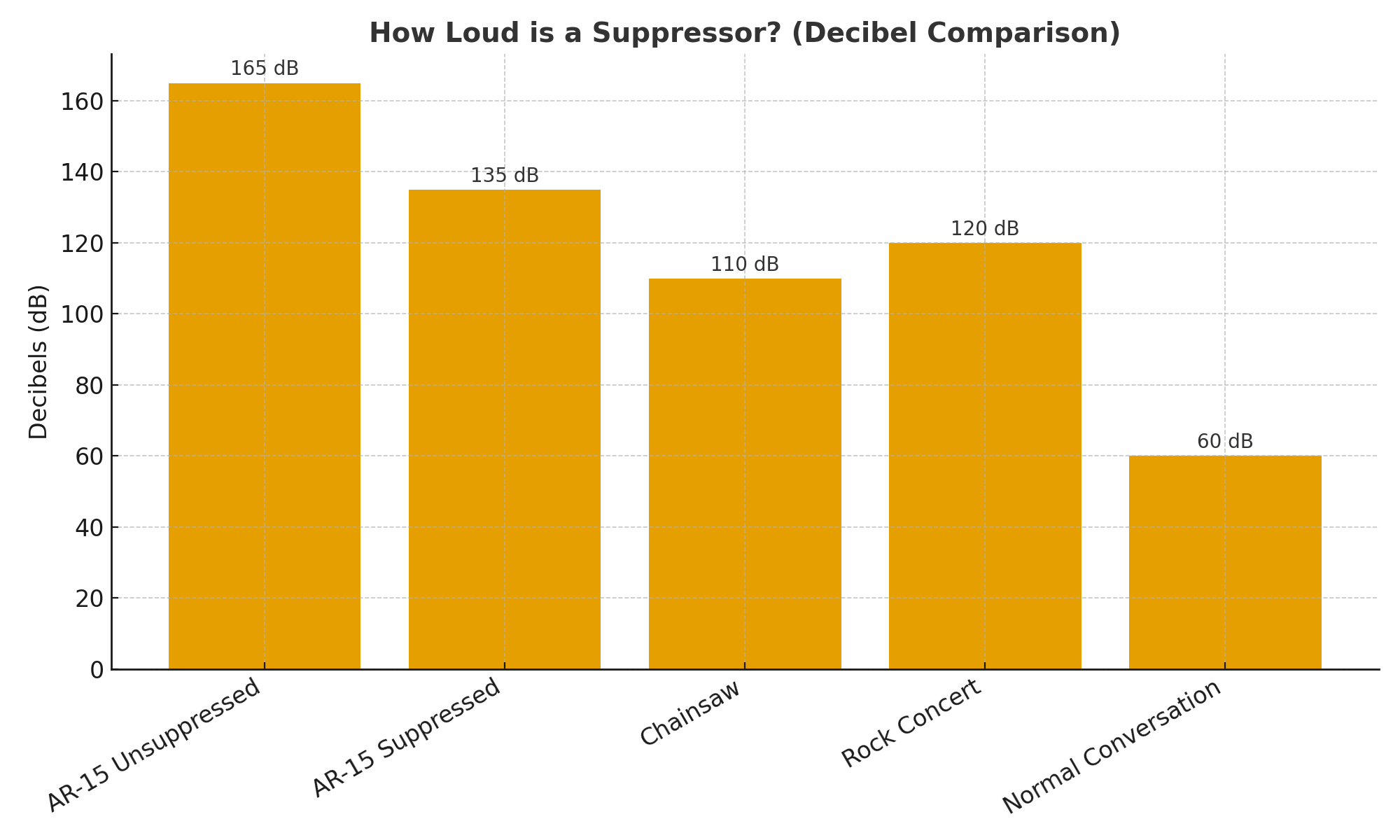
Noise Reduction: Most rifle suppressors reduce sound by 20–35 decibels. For context, a standard AR-15 in 5.56 NATO is around 165 dB at the muzzle—loud enough to cause permanent hearing damage after a single shot. With a suppressor, that drops closer to 130–140 dB. That’s still louder than a rock concert, but much safer for your ears.
Recoil & Muzzle Rise: A suppressor adds forward weight and redirects gas, which softens felt recoil and helps you keep the sights on target. That means quicker, more accurate follow-up shots.
Flash Reduction: Suppressors also dampen muzzle flash, which makes a difference in low-light shooting. That’s not just a “tactical” perk—it’s also less blinding if you’re shooting at dusk or night hunting.
Why They’re More Than a Toy
This is where the conversation shifts from “cool gear” to “responsible gear.”
Hearing Protection: Firearms are one of the leading causes of permanent hearing loss among outdoorsmen, soldiers, and police officers. Even if you always wear ear pro, accidents happen. A suppressor builds in a layer of safety.
Training & Communication: Range days are better when everyone isn’t shouting over ear-splitting gunfire. You can talk, teach, and learn without blowing out your eardrums.
Hunting Applications: Out in the field, you’re not always wearing ear pro when that big buck shows up. A suppressor protects your ears without sacrificing awareness of your surroundings. It also reduces the noise footprint on land, making it easier to maintain good relationships with neighbors and landowners.
Myths vs. Reality
There’s a lot of baggage around suppressors in the U.S.—mostly from movies and media. Let’s set the record straight.
Myth: Suppressors are for assassins.
Fact: In most of Europe, they’re seen as courtesy equipment. In places like Norway, Finland, and New Zealand, hunting without one is considered bad form because of the noise pollution it causes.Myth: Suppressors make your gun “silent.”
Fact: Even suppressed, an AR-15 is about as loud as a jackhammer. Hollywood’s “pew pew” sound is fiction.Myth: They’re illegal.
Fact: Suppressors are legal in 42 U.S. states, but heavily regulated under the National Firearms Act (NFA). Buying one requires fingerprints, photos, and a federal background check.Myth: They’re pointless if you already have ear pro.
Fact: Ear pro protects the shooter. A suppressor reduces the blast for everyone in the area, including your buddies on the firing line or your hunting dog in the field.
A Tool, Not a Luxury
At the end of the day, a suppressor is safety equipment first and “cool gear” second. It doesn’t make you John Wick. It doesn’t magically hide your shots. But it does make shooting safer, cleaner, and in many ways more professional.
For the average AR owner, the question isn’t if a suppressor is useful—it’s whether the cost, paperwork, and wait times are worth it. That’s where things get tricky… and that’s where we’ll head in Part 2.
Closing Thoughts & What’s Next
So, do you really need a suppressor? That’s the million-dollar question. Right now, we’ve looked at the hard facts—what they do, how they work, and the misconceptions that surround them. For some, they’re just a “cool” accessory. For others, they’re an essential tool for protecting hearing, improving accuracy, and being a more responsible gun owner.
But this is just the beginning. In Part 2, we’ll go deeper into the legal side of things—how to actually buy one, what the ATF process looks like, and why that “big beautiful bill” everyone’s talking about might not be as simple as it sounds. We’ll also dig into the cultural differences: why in countries like Norway or New Zealand it’s considered bad manners to shoot unsuppressed, while here in America it’s treated like a privilege for the few.
And hey—if you want to hang out in person, I’ll be at the Pulaski County Flea Market on September 13th & 14th. Come find me, talk gear, and let’s swap stories about building a smarter, stronger, and more responsible gun culture together.
Until then—train smart, stay sharp, and keep your powder dry